
The Glaze Results of the Ilmenite Tests
A few days ago, I shared a look behind the scenes of my glaze testing process, experimenting with two new ceramic glaze recipes that both included ilmenite. Today, the tests are finally out of the kiln, and I’m excited to share what worked, what didn’t, and where I’m headed next.
Glaze Test Results: The Role of Ilmenite
As expected, the ilmenite stayed relatively gritty and visible on the surface of both glaze samples. I anticipated this going in, since ilmenite doesn’t melt fully in my firing range. What surprised me, though, was how the iron content in the ilmenite added unexpected pink and reddish hues in some spots, something to keep in mind for later.

My test results out of the kiln
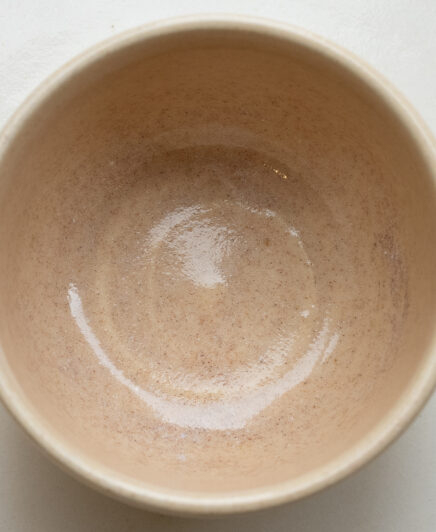
Test One: From Pink to Peach
One of the glazes I was most excited about was a soft pink glaze. It didn’t come out exactly as I had envisioned. Although I have some idea when I make a glaze test of how it will look; raw materials can behave ever so slightly differently even if you buy it from a different supplier or in different batches. Also the slightest change in a percentage can make a big difference.
The test turned out more of a soft peach glaze than a true pink, but I actually love how gentle and warm the tone feels. It has a soft finish that I think will pair beautifully with my upcoming forms.
Even though it wasn’t the exact shade I imagined, it has real potential. I’m planning to mix a larger batch and apply it to a few finished pieces to see how it performs on a bigger scale.
Test Two: Creamy White with Room to Grow
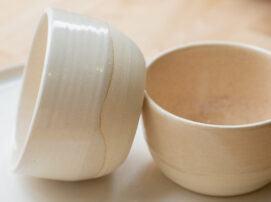
The second glaze was supposed to be a creamy white glaze that I hoped would be rich with variation and depth. It came out nice, but not quite as creamy or variated as I wanted.
I placed it next to the my white gloss glaze that I currently have in production. On the picture, the cup is sitting on a plate which has this glaze on it... The cup with the test glaze on it stood out against it as being a little more satin and creamy but just not quite enough.
For this one, I’ll be revisiting the recipe. I might tweak the base glaze to increase movement and soften the finish. I want a tone more creamy, and slightly more matt.

I'm going to reduce the Ilmenite. What's Next?
Glaze testing is one of my favorite parts of the ceramic process, it’s always a mix of science, surprise, and patience. I’ve learned a lot from these two glazes, and I’m already deep into the notes for the next round. I’ll be adjusting both recipes and continuing to explore the effects of ilmenite in my glazes, especially in very small, intentional doses.
For these tests, I added 1% ilmenite. It turned out a bit too much for my taste, so for the next batch I’m planning to reduce that to 0.5% or even a touch under, hoping for more subtle speckling that still adds interest without overpowering the glaze.
I'll show you the larger batch of forms with the soft peach glaze soon!
More Posts
ON OUR BLOG
Behind the Scenes: Testing Two New Glaze Recipes in the Studio Both containing Ilmenite
Today was Sunday and I was in the studio getting some pieces ready for a glaze firing in the kiln. I had promised myself that in this firing, I would test out some speckled glazes, as I picked up some ilmenite recently, a material I’ve never worked with before, but have heard a lot about from other potters.
Both recipes are built around materials I keep coming back to: soft satin surfaces and earthy, beachy tones.
Ilmenite is said to create natural, dark speckles that break through the glaze surface like scattered grains of volcanic sand. It's a raw mineral rich in iron and titanium, and even in small amounts, it can add texture, variation, and a subtle wildness to otherwise smooth, calm glazes.

My tests
I was curious to see how it would interact with my more muted bases and whether it could add just the right amount of grit to the softness. I think that I'm slightly apprehensive about it too. The grains seem very small and I'm not sure if I added a little too much to my recipe. I want a soft speckle and I wonder if the ilmenite will be too sharp
Cream & Speckle
This test is based on a satin matte white glaze I’ve been refining; smooth to the touch, slightly creamy, and designed to bring softness to functional forms. I’ve added a couple of granular minerals that, if all goes well, should introduce a quiet constellation of dark specks across the surface. I'm hoping for a more creamy version and so I added a little Rutile and upped the titanium dioxide. This glaze is part of an ongoing series I'm developing, elegant neutrals with character glazes that feel earthy and grounded, yet refined enough for everyday use.
Rutile Pink Try
I've been trying to create a soft pink for a while now. I’ve experimented with tin oxide and chromium, but that combination tends to produce stronger, more intense colors. What I'm really after is an understated, earthy pink, something subtle and natural. I have a feeling I might be able to achieve it using tin oxide alongside the tiny amounts of chrome naturally present in rutile.
This test involved a slight misstep though, but I decided to go with it. Sometimes that’s how the best surprises happen in the studio.
In this case, I accidentally added more of Zinc oxide than I meant to. I was distracted mid-mix and only realized after everything was already blended. Instead of scrapping the batch, I decided to go ahead with the test. It might make the pink more bright which is what I'm trying to avoid but let's see. Ceramics has taught me that sometimes accidents lead to unexpected beauty, and this felt like one of those moments worth exploring.
A Moment For Ilmenite
Both glaze tests I mixed today include a small amount of ilmenite. I'm hoping for soft dark specks that break through the surface of a glaze like flecks of earth or ash. There’s something grounding about it, like the glaze is reminding you it came from the soil, not a factory.
Speckling adds a kind of visual texture that soft, satin surfaces can sometimes lack. It gives movement without gloss, depth without decoration. And in glazes that aim for gentle colours like whites or pinks, it introduces contrast in a really subtle, satisfying way.
This kind of detail is what draws me to ceramics, not perfection, but variation.
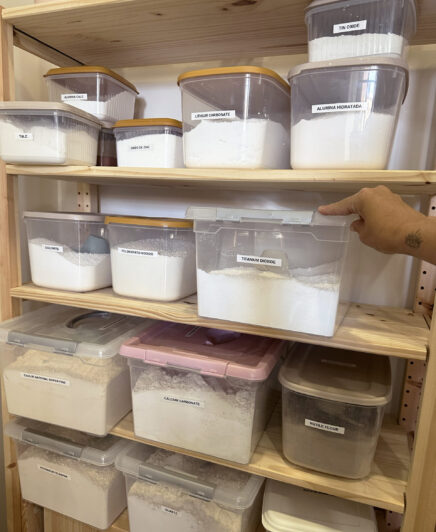
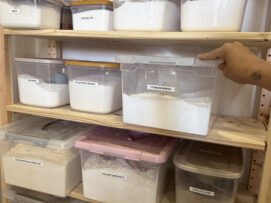
My raw materials
I'll share the results soon!
More Posts

EMAIL: contact@mioamar.com
WHATSAPP: 638 005 168
CALLE ESCULTOR LUIS BOLINCHES COMPANY, 18, PORTAL -1 BLOQUE 1- LOCAL N° 1.
© 2025 Mioamar.com by Clay & Code SL