
Creating a Handbuilt Ceramic Lamp by Combining Wheel Throwing with the Ancient Coiling Technique
One of my days in the studio, after throwing a few plates to warm up and settle into the rhythm of the wheel, I felt the urge to shift gears.
While functional pottery has its quiet satisfaction, I’ve been craving something more artistic and have been planning a ceramic lamp design for a while now.
This was the day was the day to bring it to life. What makes this piece special is not just its form or function, but the method.
I combined wheel-throwing with one of pottery’s oldest and most expressive handbuilding methods, the coiling technique.
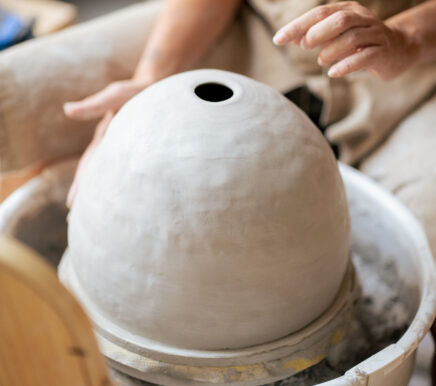
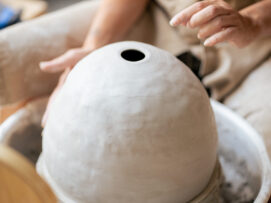
Finishing touches before I take the coiled lamp off the wheel to dry
Starting on the Wheel, Throwing the Lamp Base
Like many ceramic pieces, my lamp began on the potter’s wheel. I centred and threw a solid, stable base that would serve as the foundation for the lamp’s structure. Later, I'll cut into this base so that I can move the electrical wire through it.
This part was all about symmetry, balance, and ensuring the form would be structurally sound once I began building upward.
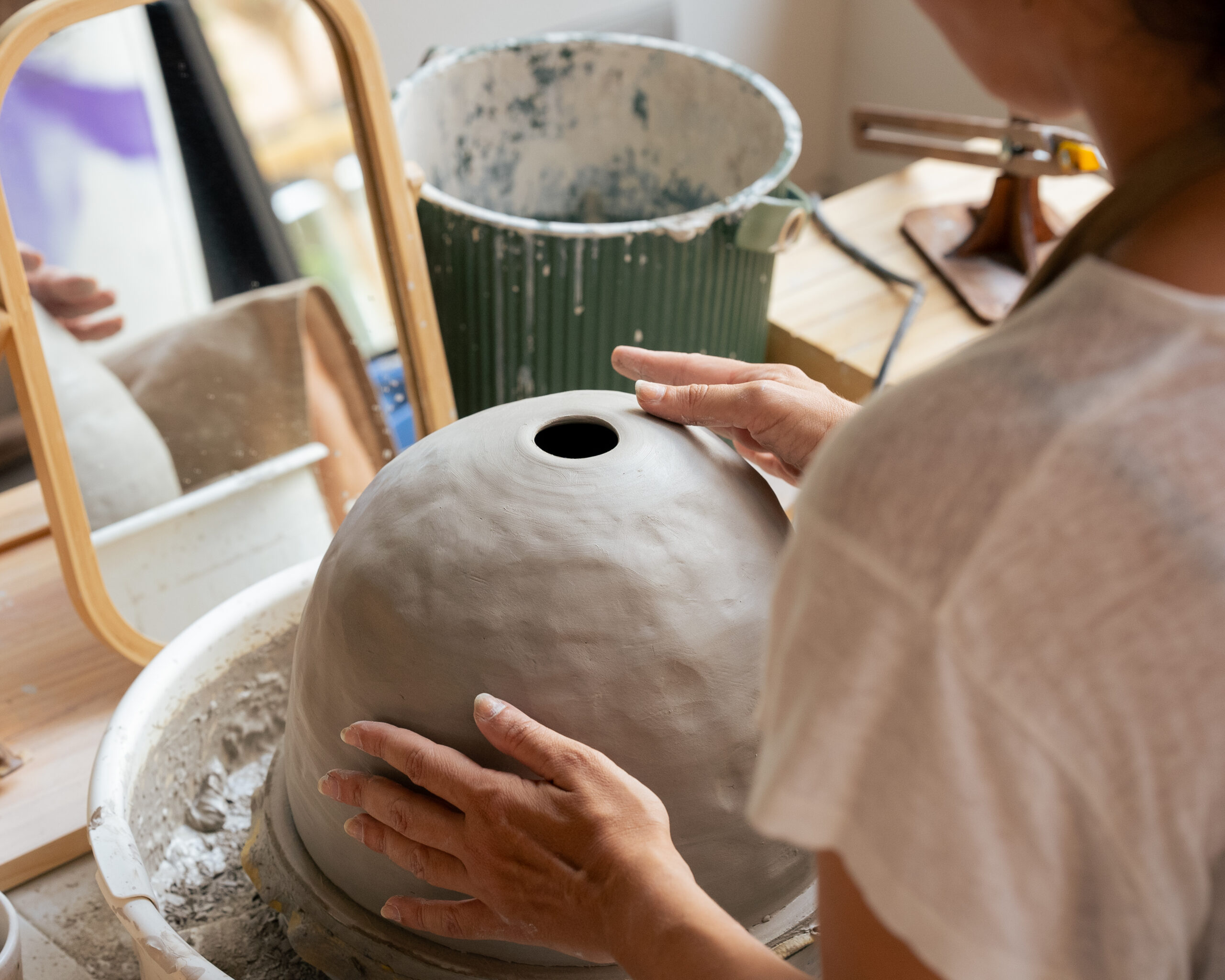
What makes this piece special is not just its form or function, but the method.
What is the Coiling Technique in Pottery?
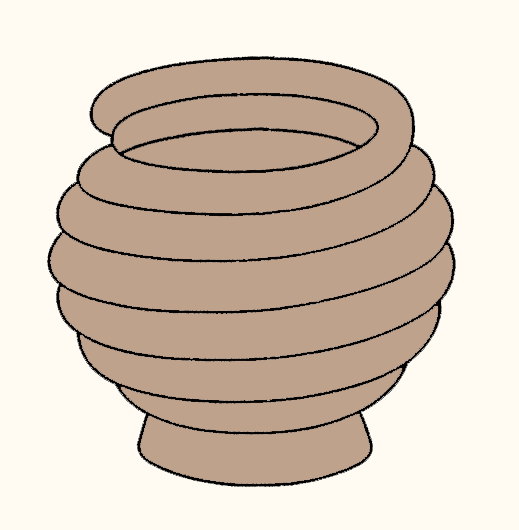
Coils are stacked and blended together to form vessels
The coiling technique is one of the oldest in ceramics, dating back thousands of years to ancient cultures across the globe. In its simplest form, it involves rolling out long, snake like ropes of clay (coils), which are then stacked and blended together to form vessels. This method allows for incredible flexibility in shape and scale, making it ideal for both functional and sculptural pottery.
Each coil is carefully placed on top of the previous one, allowing me to control the curve, direction, and overall silhouette of the piece. After placing a coil, the joint is either left visible as a decorative element or smoothed into the structure for a more uniform surface. Personally, I like to smooth out the coil but I love to see slight remaining curves and bumps of the coil underneath.
A Technique Rooted in History
Historically, the coiling technique has been used by ancient civilizations across the worldfrom the Jōmon period in Japan, Neolithic cultures in China and Korea, to early potters in the Middle East and Egypt, and the Native American Pueblo tribes of the American Southwest.
These cultures used coiling not just to construct vessels, but also to express identity, status, and spirituality through form and surface decoration.
Unlike wheel thrown pottery, which was introduced much later, coiled pots were accessible to early peoples without the need for advanced tools. The technique has stood the test of time not just because of its simplicity, but due to the depth of creative freedom it offers.
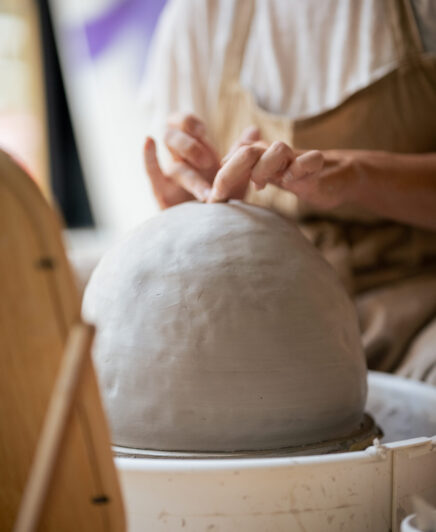
Paying special attention to the opening that will support the light fitting.
Integrating Coiling Into a Contemporary Lamp Design
As I began coiling up from the wheel thrown base, I focused on keeping the curves soft and slightly irregular because I want a more rustic outcome to this shape. I use my heatgun to save time and make sure the form is sturdy as I build upwards. I'm using the wheel only to turn slowly so that I can work my way around.
Lastly I'm very careful with the top and final part of the form that will hold the light fitting. This part needs to be as level as possible so that the light stands correctly.
This lamp will be available in my store soon! I can't wait to show you the finished result.
More Posts

EMAIL: contact@mioamar.com
WHATSAPP: 638 005 168
CALLE ESCULTOR LUIS BOLINCHES COMPANY, 18, PORTAL -1 BLOQUE 1- LOCAL N° 1.
© 2025 Mioamar.com by Clay & Code SL